

Introduction
Cutting curly hair at home can seem challenging, especially if you’re unfamiliar with the unique behavior of your curls. However, with the right techniques, tools, and expert tips, you can learn how to cut curly hair at home like a pro. Curly hair requires special attention during cutting because it behaves very differently from straight hair.
Considerations such as curl shape, volume, and shrinkage are crucial to avoid uneven results. If you’ve had trouble with salon cuts that don’t suit your curls or want to save money by trimming at home, mastering this skill is invaluable. With the proper methods and tools, you can maintain your curls’ shape while keeping them healthy and vibrant.
| Step | Description | Tips |
| Gather Tools | Use sharp scissors, clips, a spray bottle, and a wide-tooth comb. | Invest in high-quality tools for better results. |
| Prepare Hair | Wash and condition hair, then detangle gently. | Work from ends to roots to minimize breakage. |
| Decide on Cutting Method | Choose to cut hair wet or dry based on your preference. | Dry cutting reveals the natural curl shape more clearly. |
| Section Hair | Divide hair into manageable sections using clips. | Smaller sections allow for greater precision. |
| Choose Technique | Select a cutting method (curl-by-curl, DevaCut, point-cutting). | The curl-by-curl method enhances texture and natural form. |
| Cut Carefully | Trim ends following the curl pattern, avoiding blunt straight cuts. | Start by trimming minimal length to avoid overcutting. |
| Check for Balance | Inspect the cut from different angles for evenness and adjust if needed. | Step back frequently to ensure symmetry. |
| Maintain Hydration | Use hydrating products post-cut to keep curls healthy and soft. | Incorporate leave-in conditioners and curl creams. |
| Schedule Regular Trims | Trim every 8-12 weeks to maintain curl shape and health. | Consistency is essential for beautiful curls. |
Understanding Curly Hair
Before you start cutting, it’s important to understand what makes curly hair unique. Curly hair texture varies greatly between individuals due to differences in curl pattern, thickness, and density. Understanding these factors will help you choose correct cutting methods suited to your hair.
Types of Curls
Curls are commonly categorized into four main types:
- Type 1: Straight hair without any curls.
- Type 2: Wavy hair featuring loose, gentle curls.
- Type 3: Curly hair with well-defined, springy curls.
- Type 4: Coily or kinky hair characterized by tight, densely packed curls.
Knowing your curl type will guide you to the most effective cutting techniques and product choices, ensuring the best results for your hair.
Essential Tools to Cut Curly Hair at Home
Having the right tools makes all the difference when cutting curly hair at home. Here’s what you need:
- Sharp Hair-Cutting Scissors: Invest in professional-grade shears to prevent split ends and frizz caused by dull blades.
- Hair Clips: Essential for sectioning your hair and managing curls during the cut.
- Spray Bottle: Keep curls moist and manageable throughout the process without soaking them.
- Wide-Tooth Comb: Perfect for detangling without disrupting the curl pattern or causing breakage.
- Mirror: A good mirror setup, preferably a triple or handheld mirror, is crucial for clear visibility.
- Towel: Keep handy for any water drips and to help manage wet curls.
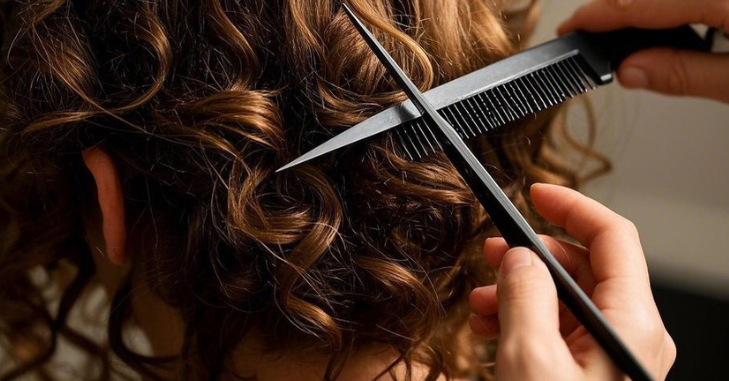
Preparing Your Hair for Cutting
Proper preparation makes cutting easier and more precise. Follow these steps before trimming your curls:
1. Clean and Condition
Wash your hair with a sulfate-free shampoo and follow up with a rich, moisturizing conditioner. This hydrates your hair, enhances curl elasticity, and makes detangling easier.
2. Detangle
Carefully detangle your hair using a wide-tooth comb or your fingers, starting from the tips and moving upward to the roots to prevent breakage.
3. Dry Your Hair
Decide whether to cut your hair wet or dry. Many curly-haired people prefer cutting dry to see how curls fall naturally and account for shrinkage. If you opt to cut wet, avoid soaking hair deeply since wet curls tend to stretch and look longer, which can result in cutting more than intended.
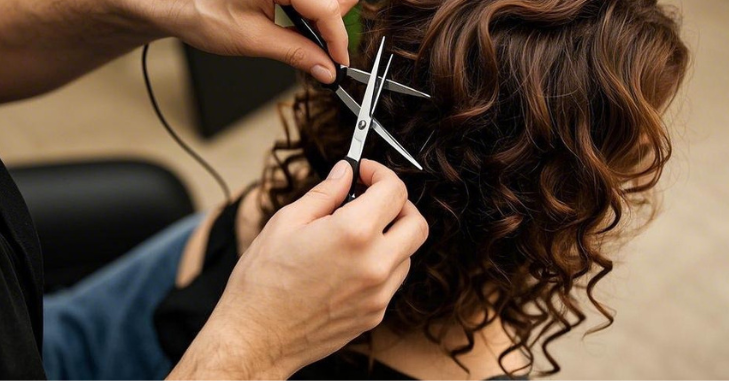
The Role of Curl Shrinkage and Hair Elasticity in Home Haircuts
One important aspect many people overlook when cutting curly hair at home is the relationship between curl shrinkage and hair elasticity. Curly hair can shrink anywhere from 30% to 70% once it dries, depending on curl tightness and moisture levels.
Hair with high elasticity stretches easily when wet but springs back as it dries, which can lead to cutting hair shorter than intended if this factor is ignored. To manage this, it’s best to cut curls in their natural state or allow hair to partially dry before trimming.
Effective Techniques for Cutting Curly Hair at Home
Explore these popular cutting techniques that help preserve the natural pattern and health of curly hair.
1. The Curl-by-Curl Method
This precise technique involves cutting each curl individually to maintain its natural integrity and bounce.
How to Do It:
- Divide hair into small sections.
- Isolate one curl at a time and hold it gently between your fingers.
- Trim the ends following the natural spiral of each curl, avoiding blunt, straight cuts.
2. The DevaCut Method
The DevaCut is a specialized method designed for curly hair, performed while curls are dry and in their natural shape.
How to Do It:
- Allow your curls to air dry completely, without manipulation.
- Section your hair and gently pull each curl to assess length and shape.
- Trim just the ends, preserving the overall curl silhouette for a natural look.
3. The Point-Cutting Technique
This method softens the cut edge by snipping hair ends at an angle to create texture and reduce bulkiness.
How to Do It:
- Take small sections of hair and hold them between your fingers.
- Use scissors to cut into the ends diagonally rather than straight across.
- This creates a blended effect, adding movement and preventing bluntness.
4. The Layering Technique
Layering adds dimension, bounce, and shape to curly hair.
How to Do It:
- Section your hair into at least two layers: top and bottom.
- Trim the top layers a bit shorter than the bottom layers to create depth.
- Use the curl-by-curl method on each layer to maintain curl consistency and blend.
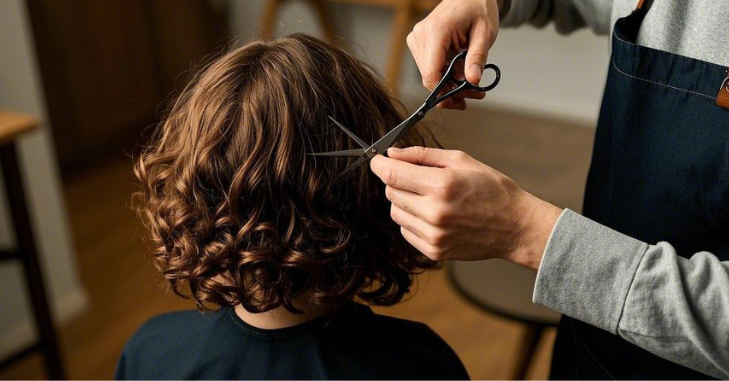
Top Tips for Cutting Curly Hair at Home
1. Take Your Time
Patience is essential. Rushing increases the likelihood of mistakes and uneven cuts, so proceed carefully and methodically.
2. Start Small
Trim only a small amount at first. You can always go back and cut more once you feel confident with your technique.
3. Use Good Lighting
Ensure your workspace is well-lit—natural light is ideal—to see your curls clearly and make precise cuts.
4. Have a Backup Plan
If you feel uncertain, practice your cutting techniques on a wig or a willing friend before attempting your own hair.
5. Seek Help if Needed
If you’re unsure about cutting tricky areas, don’t hesitate to ask a friend for assistance or consult a professional professional stylist for guidance.
Maintaining Your Curls After Cutting
After trimming your curls, maintain their health and shape with these post-cut care tips:
1. Hydrate
Use hydrating conditioners and deep conditioning treatments regularly to keep curls nourished and soft.
2. Avoid Heat
Limit the use of heat styling tools to prevent dryness and damage. Embrace your natural curl texture for the healthiest hair.
3. Regular Trims
Maintain your curls’ shape and remove split ends by scheduling trims every 8-12 weeks.
4. Use the Right Products
Choose curl-friendly products such as leave-in conditioners, curl creams, and lightweight oils to enhance your curl definition and moisture retention.

Common Mistakes to Avoid When Cutting Curly Hair at Home
To ensure a successful haircut, keep these typical errors in mind:
- Cutting Too Much: It’s easy to overtrim. Always start by cutting less than you think is necessary.
- Cutting Straight Across: Avoid blunt cuts; hair should be trimmed according to its natural curl pattern for a more flattering finish.
- Ignoring Curl Shrinkage: Curls shrink as they dry. Be cautious when cutting wet hair to avoid trimming too short.
Conclusion
Cutting curly hair at home like a professional is achievable when armed with the right knowledge, tools, and patience. By understanding your curl type and applying tailored cutting techniques, you can maintain gorgeous, healthy curls without the need for frequent salon visits.
Take your time, be gentle with your hair, and celebrate the unique beauty of your curls. With consistent practice, you’ll enjoy bouncy, well-shaped curls for years to come.
If you’re interested in learning more about “How To Use Amla Powder For Hair?,” be sure to visit our “Daily Bites” category for further insights and guides.
Frequently Asked Questions (FAQs)
You will need sharp hair-cutting scissors, hair clips, a spray bottle filled with water, a wide-tooth comb, and a mirror. A towel can also be useful to manage any water drips during the process.
Yes, it is safe to cut curly hair at home if you follow proper cutting techniques, take your time, and use the right tools. Having prior practice or consulting tutorials can improve your confidence.
Avoid cutting too much hair at once, making straight blunt cuts, and neglecting curl shrinkage when cutting wet hair. Always trim according to the curl shape and start with small trims.
Both methods have benefits. Cutting dry hair shows the natural curl pattern and shrinkage, while cutting wet hair can be easier to manage. Choose the approach that you feel most comfortable with and that best suits your hair.
For healthy curls and to maintain shape, schedule trims every 8 to 12 weeks. Regular trims help to prevent split ends and encourage curl definition.
It’s best to use sharp hair-cutting scissors specifically designed for hair. Using dull or household scissors can cause split ends and frizzy results.