Autumn is a beautiful season, but it can also be a challenging time for trees. Homeowners may notice their trees developing spots, losing leaves prematurely, or showing other signs of distress. Understanding common fall tree diseases and how to treat them is essential for maintaining healthy trees and preventing long-term damage. In this listicle, you’ll discover some prevalent fall tree diseases, how to identify them, and practical steps for treatment.
Powdery Mildew
Powdery mildew presents as a white, powdery substance on leaves, stems, and buds. It thrives in warm, dry conditions and spreads easily. Look for white or grayish patches on the surfaces of leaves and stems. Infected leaves may curl, turn yellow, and drop prematurely. Remove and destroy infected plant debris to reduce the spread. Apply fungicidal sprays specifically labeled for powdery mildew control. Achieve good air circulation around trees by pruning overcrowded branches.
Anthracnose
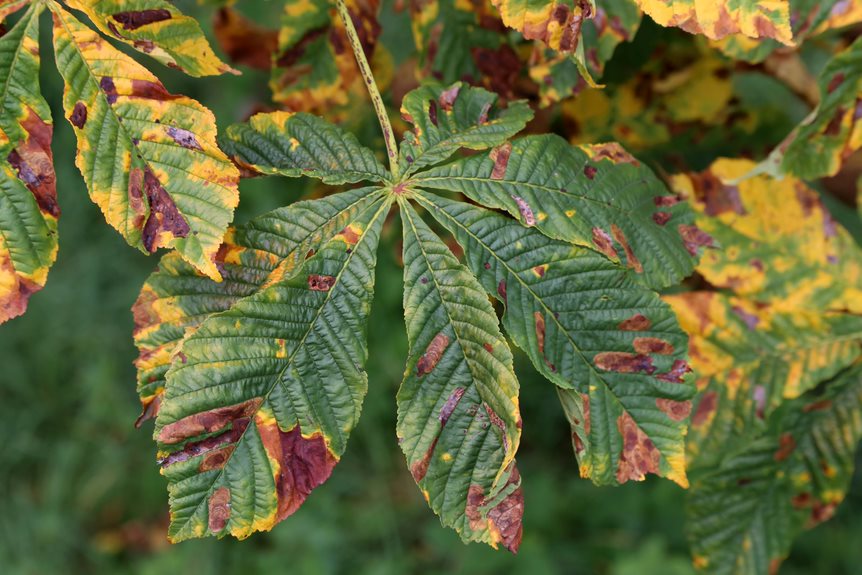
Anthracnose is a fungal disease affecting trees like sycamore, oak, and maple, causing leaf spots, blotches, and early leaf drop. Look for irregular, dark brown spots on leaves, often following veins. Severe infections cause leaves to curl and die prematurely, but the disease rarely kills the tree. Rake and destroy fallen leaves to remove spores. Prune infected branches during the dormant season. Apply fungicides in early spring if the disease was severe the previous year.
Root Rot
Root rot is caused by various soil-borne fungi and affects the roots of trees, leading to poor growth and, in severe cases, tree death. Watch for symptoms such as yellowing leaves, wilting, dieback, and stunted growth. Check for decayed, soft roots and a foul smell in the soil. Improve soil drainage around the tree. Remove and destroy infected roots. Avoid overwatering, and consider applying a fungicide drench to the soil.
Apple Scab
Apple scab affects apple and crabapple trees, causing unsightly blemishes on leaves and fruit. Look for olive-green to brown, velvety spots on leaves and fruit. Infected leaves may curl, turn yellow, and drop prematurely. Fruits develop dark, sunken lesions. Prune and dispose of infected leaves and fruit. Select resistant tree varieties when planting. Apply fungicides in early spring to protect new growth.
Leaf Spot
Various fungi cause leaf spot diseases, resulting in small, dark lesions on leaves. Trees such as birch, elm, and maple are commonly affected. Notice small, circular spots with dark borders on leaves. Severe infections can cause significant leaf drop. Rake and destroy fallen leaves to reduce fungal spores. Proper spacing and pruning are necessary to promote good air circulation. Apply fungicides labeled for leaf spot control if necessary.
Rust
Rust is a fungal disease causing yellow or orange spots on leaves, and it can affect a number of tree species. Examine leaves for bright yellow or orange spots on the upper surface, with corresponding orange pustules on the underside. Severe infections can lead to leaf drop. Remove and destroy infected leaves. Apply fungicides at the first sign of infection. Choose rust-resistant tree varieties when planting.
Verticillium Wilt
Verticillium wilt is a soil-borne fungal disease affecting a variety of trees, including maple, ash, and elm. Look for wilting, yellowing, and browning of leaves, often starting on one side of the tree. Cutting into an infected branch reveals dark streaks in the wood. Remove and destroy infected branches. Improve tree vigor with proper watering and fertilization. Avoid planting susceptible species in affected areas.
Dutch Elm Disease
Dutch elm disease, caused by a fungus spread by elm bark beetles, leads to rapid wilting and death of elm trees. Watch for wilting, yellowing, and browning of leaves starting at the top of the tree. Peeling back bark reveals dark streaks in the wood. Promptly remove and destroy infected trees to prevent spread. Apply fungicides to healthy trees to protect them. Control elm bark beetles through insecticide treatments.
Maintaining Healthy Trees
Understanding common fall tree diseases and their treatments is crucial for homeowners who want to keep their trees healthy year-round. Regular monitoring, proper hygiene, and timely treatments can prevent these diseases from causing severe damage. If you’re unsure about a diagnosis or treatment, consult a professional arborist like Atlas Tree Service Inc. to give your trees the best care possible.
Take proactive steps today to protect your trees, and enjoy the beauty and benefits they provide for years to come.
if you want to know about Cost to Encapsulate Crawl Space then please visit our Home Improvement Category.