
Introduction
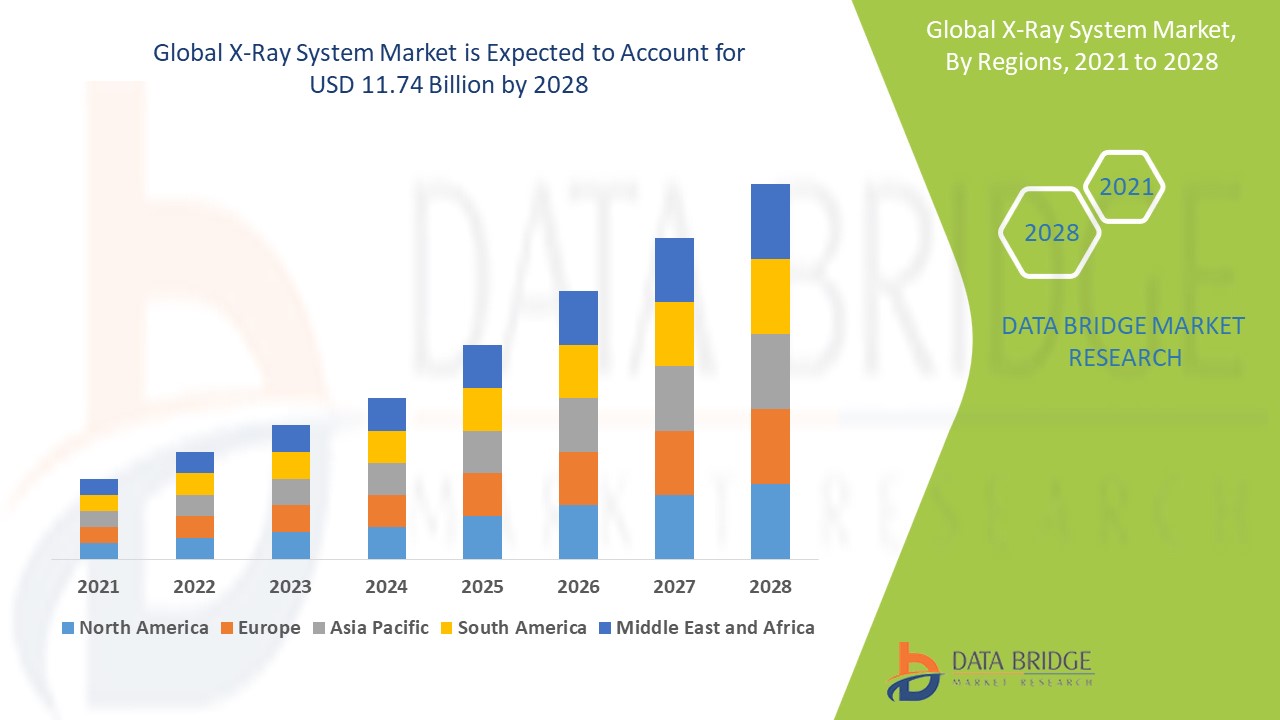
Between 2021 and 2028, the global X-ray systems market is expected to experience significant growth, driven largely by the expanding geriatric population and the rising prevalence of chronic diseases. Additionally, increasing cases of fractures and orthopedic disorders, along with rapid advancements in X-ray system technology, are projected to propel market expansion. Supportive government initiatives, favorable regulations, and rising investments are also critical factors set to accelerate growth in the X-ray systems sector worldwide market.
According to Data Bridge Market Research, the X-ray systems market was valued at USD 11.74 billion in 2021 and is forecasted to grow at a compound annual growth rate (CAGR) of 4.05% through 2028. One of the main drivers of this growth is the increasing demand for early and accurate disease diagnosis using advanced imaging technologies.
Key Insights & Findings from the Report
- Radiography remains the most utilized diagnostic imaging technique and is expected to retain its dominant market position throughout the forecast period, as it is often the first diagnostic step recommended by physicians.
- Digital radiography is anticipated to witness the fastest growth, owing to its ability to produce high-contrast images with reduced ionizing radiation exposure.
- In 2021, stationary X-ray systems accounted for the largest revenue share within the mobility segment.
- Mobile X-ray systems x-ray systems market are forecasted to grow rapidly due to their enhanced mobility, superior image quality, fast processing times, and improved safety features.
- The diagnostic imaging centers segment is projected to see the highest growth rate among end-users during the forecast period.
- North America led the global market in 2021, generating the highest revenue share.
- Asia Pacific is expected to experience the fastest CAGR, driven by growing demand for advanced imaging equipment and expanding healthcare infrastructure.
X-ray Systems Market Growth & Emerging Trends
Innovations such as the integration of artificial intelligence (AI) in medical imaging and the development of mobile and robotic X-ray solutions are revolutionizing the market. These advances have made X-ray technology more accessible and affordable, especially in resource-limited regions worldwide. For instance, in March 2021, Philips Healthcare partnered with Lunit, a leading medical AI company, to integrate Lunit’s INSIGHT CXR chest detection software into Philips’ diagnostic X-ray systems. This collaboration aims to enhance diagnostic accuracy, improve patient and staff experiences, and reduce healthcare costs.
The increasing prevalence of chronic diseases—including cancer, neurological disorders, orthopedic conditions, and cardiovascular diseases—is creating greater demand for precise diagnostic imaging. Furthermore, the shift towards digital radiography systems, offering better image quality with lower radiation doses, is positively impacting market growth.
Key Advantages of X-ray Systems
- Time-Tested Diagnostic Tool: X-rays have long been a fundamental component of medical diagnosis, aiding clinicians with valuable insights even when they do not provide definitive diagnoses alone.
- Non-Invasive Imaging: X-rays enable medical professionals to examine internal structures without invasive procedures, facilitating diagnosis and monitoring of treatment efficacy.
- Procedural Guidance: X-ray imaging assists physicians in accurately positioning catheters, stents, and other medical devices, and supports treatments such as clot removal and cancer therapy.
- Unintended Discoveries: X-rays can sometimes reveal unexpected conditions, like bone infections, abnormal gas or fluid presence, or tumors, which may alter clinical management.
Potential Disadvantages & Risks Associated with X-ray Systems
- Radiation Exposure: X-rays involve ionizing radiation that can potentially damage DNA and increase long-term cancer risk. Organizations such as the World Health Organization (WHO) and U.S. governmental bodies classify X-rays as carcinogenic agents. Despite this, the diagnostic benefits significantly outweigh these risks when managed properly.
- CT Scan Concerns: Computed tomography (CT) scans, which use X-ray technology, are estimated to contribute to approximately 0.4% of cancer cases in the U.S. The growing use of CT imaging is expected to increase this risk marginally.
- Short-Term Side Effects: Although rare, high or repeated radiation exposure may cause nausea, bleeding, fainting, hair loss, or skin damage.
- Safety Precautions: Appropriate usage protocols, shielding, and limitations on exposure are essential to minimize health risks associated with X-ray imaging.
For more detailed information, please visit:
https://www.databridgemarketresearch.com/reports/global-x-ray-systems-market
Conclusion
The global X-ray systems market shows promising growth supported by technological advancements, increasing disease prevalence, and rising healthcare investments. Comprehensive market analysis backed by historical data and key vendor insights enables stakeholders to make informed decisions regarding revenue opportunities, volume forecasts, and strategic growth initiatives.
Why Choose Data Bridge Market Research
Data Bridge Market Research is committed to delivering comprehensive, high-quality market intelligence across global, regional, and country-specific segments. Our in-depth research covers various products, services, technologies, applications, end-users, and key players, empowering clients to gain deeper insights and make well-informed business decisions.
Frequently Asked Questions (FAQs)
The growth is primarily driven by the increasing geriatric population, rising incidence of chronic diseases, technological advancements such as digital radiography and AI integration, and supportive government initiatives.
Digital radiography produces high-quality images with less ionizing radiation compared to traditional radiography, resulting in faster image processing and enhanced patient safety.
North America currently leads the market in revenue, while Asia Pacific is the fastest-growing region due to increased healthcare investments and demand for advanced imaging technologies.
When used appropriately with proper safety measures, X-rays are generally safe. However, exposure to ionizing radiation carries a small risk of adverse effects, so usage is carefully managed in clinical settings.
Recent innovations include AI-powered diagnostic software, mobile and robotic X-ray units, and enhanced digital radiography systems that improve image quality and reduce radiation exposure.
if you want to know about The Pros and Cons then please visit our Health Category.